
HỘI THIỀN TÁNH KHÔNG TRUNG ƯƠNG

ENG020 Bhikkhuni Triệt Như - Sharing From The Heart - No 83: THE FACE OF ZEN - Translated into English by Hoàng Liên - Edited by Linh Văn Lai

Sunday, May 16, 20217:42 AM(View: 6590)

Triệt Như - Sharing From The Heart - No 83

Translated to English by Hoàng Liên

Edited by Linh Văn Lai


THE FACE OF ZEN
Triệt Như TTVN83 DUNG NHAN CỦA THIỀN

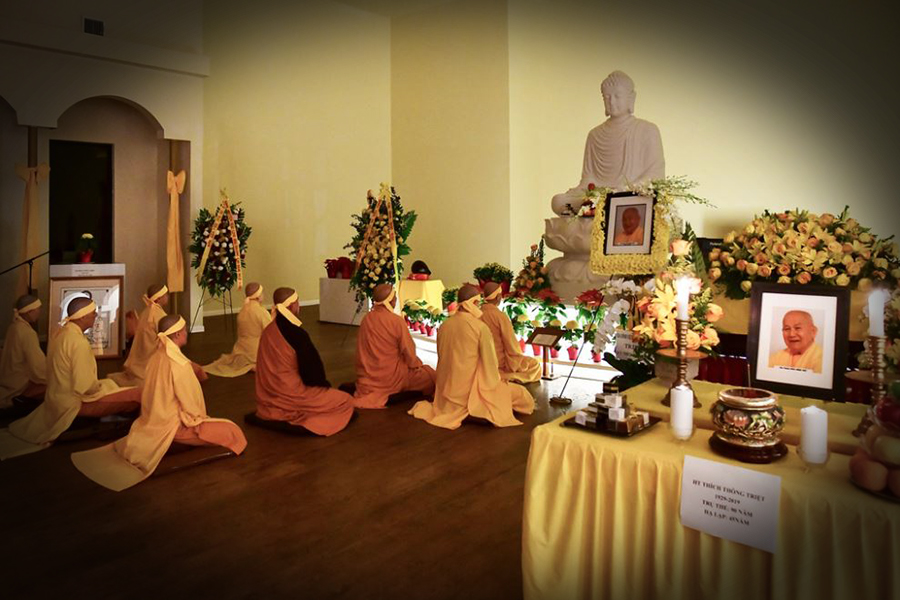
This week is the last week of December. These are the last days of the year 2020. Exactly a year ago, we were stunned as we wrapped a yellow bandanna of mourning on our heads, to bid farewell to our Master. In our hearts though, we all know that:

“Whatever happens, dear Master, You are with me,
When my mind is silent, I am with You...”

Our Master has left us a legacy, which is his Dharma. In accordance with the Buddha's teaching, the causal conditions are ripe for us to be "heirs of the Dharma". Our Zen path is now a very clear "treasure map". It is a logical step-by-step and gradual path that closely follows the Buddha's and Patriarchs' intent and can also be explained with modern science.

In our Constitution, our Master clearly stated that his policy is to combine the quintessence of the three Zen Buddhist schools:

  1. Meditation of the Theravàda school
  2. Meditation of the Developmental Buddhism school
  3. Meditation of Zen Buddhism

Meditation of the Theravàda School or School of the Elders: this school is slightly different from the original congregation when the Buddha was still alive. This initial congregation lasted for 100 years after the Buddha entered nirvana, which was around 383 BC. During that time, the senior disciples of the Buddha still led the congregation. Thus, the congregation was still united. The unity was safeguarded thanks to the First Buddhist Council which was presided over by Mahà Kassapa about three months after the Buddha's death.

 In 383 BC, the Second Buddhist Council was convened by Yasas to straighten up the Vinaya (monastic discipline or rules). After this council, the previously unified congregation was divided into two major schools:

  1. The Theravàda school- School of the Elders which later became the Hanayàna school. By 1954, it was renamed the Theravàda school.
  2. The Mahàsamghika school- the school of the majority or the community, which later became the Mahàyàna school. By 1954, it was renamed the Developmental school of Buddhism.

The reason for having the different names for the schools of  "Hinayana and Mahayana" lies in the many differences in their Zen practice. However, their essential tenets still reflect the Buddha's teaching. We do not want to make a right or wrong judgment when it comes to history. We just explain why we only select the quintessence of each Buddhist school and integrate them into a systematic curriculum that helps us clearly see the steps on our spiritual path.

Coming from the "old tree" of Buddhism, Zen Buddhism nevertheless is quite a distinct school of practice. It started with Zen Master Bodhidharma (6th century AD) and the lineage continued to the 6th Patriarch who was Zen Master Huineng (7th century AD). Thereafter, it blossomed into many more schools.

Zen Master Bodhidharma bellowed his "lion's roar" when he advocated:

"A special transmission outside the scriptures,

Not establishing the teaching upon words,

Direct pointing to the heart of man,

Seeing into one's own nature and attainment of Buddhahood ".

Why do I dare say "the lion's roar"?

The Theravada school has been historically considered as being conservative. It keeps the traditions instituted by the Buddha such as the following:

  • a woman cannot be ordained;
  • an individual has to be ordained to receive the important teachings;
  • in the past, ordained monks had to seclude themselves in the forests to practice and they had to ask alms to sustain themselves;
  • no one had the right to write sutras except the Buddha;
  • the spiritual path was orderly, starting with the conventional truths such as the Four Noble Truths, the Three Characteristics of All Phenomena, 37 Factors of Enlightenment, the Four Foundations of Awareness, Precepts, Samadhi and Wisdom, Abhidhamma etc...

The Tripitaka in Pali language was compiled and approved by the Theravada school in accordance with their point of view. The Tripitaka Sutra in Sanskrit was compiled and approved by the Sarvāstivāda School (Skt: Doctrine That All Is Real) in accordance with their perception. This school separated itself from the Theravàda school.

In both the Abhidhamma (in Pali) and Abhidharma (in Sanskrit), the commentators claimed themselves to be versed in the art of argumentation. They focused on analysing the dharma into minute constituent parts. Thus, as beginners, we can easily get lost in the jungle of words. On the contrary, the Development Buddhism school only expands on the ultimate wisdom truths, especially the last three truths of Emptiness, Illusory Nature and Suchness. It opened up a new, broad minded and boundless horizon of transcendental wisdom.

The Patriarchs authored many sutras, developed many themes taken from the Nikàya texts such as the chapter on Enlightenment. They formed a vast system of Prajñā sutras such as the Flower Garland Sutra (Mahāvaipulya Buddhāvataṃsaka Sūtra also called the Avataṃsaka Sutra), the Diamond Sutra (or Vajra), the Lotus sutra, the Vimalakīrti Sutra, etc.. However, the Patriarchs seemed not to have paid much attention to the practice methods like the stick, raising the duster without saying a word, etc.. All of them have the same purpose of suddenly stunning the disciple's mind into a complete standstill and emptiness that is devoid of all thoughts. From this perspective at Sunyata Meditation, we have selected the quintessence of the Theravada and Development schools to establish our spiritual practice path.

As we begin treading the path, we need to draw on the conventional truths and thoroughly apprehend those that are related to phenomena. We see that life is real and that human beings experience sorrow and conflicts. From that seeing, we endeavour to gradually transform our mind, purify it and train it to let go of attachment. We continue our journey and soon need to figure out how we can go beyond the conventional truths and reach the ultimate truths.

Here, we apply the quintessence of Zen Buddhism:

"A special transmission outside the scriptures,

Not establishing the teaching upon words,

Direct pointing to the heart of man,

Seeing into one's own nature and attainment of Buddhahood ".

Zen Patriarchs used special teaching methods: beating, shouting, squeezing the student's mouth to silence him, pinching the nose, raising the stick, raising the duster without saying a word, etc.. All of them have the same purpose of suddenly stunning the student's mind into a complete standstill and emptiness where it is devoid of all thoughts.

Today, we can no longer apply these techniques. We follow the way in which the Buddha taught. Initially, we present the dharma and after which, we guide the students through the gradual meditation practice steps. The aim is for the students to achieve a state of mind in which thinking, discriminating and reasoning have stopped. The student is in a state of clear awareness with a totally silent and empty mind. We call it Non Verbal Awareness. At that moment, the student experiences silent awareness through the faculties of seeing, hearing and touch which are the first steps of "seeing into one's own nature".

This is the goal of our Fundamental Meditation Course. We don't analyse into details what the worldly mind is and what the different aspects of sorrow are. We go straight to the true mind and during this dwelling, the worldly mind immediately disappears.This is the special point that our Teacher has emphasized for decades: This "direct pointing to the man's heart" is the "sound of the lion's roar" of Bodhidharma. It is as if one is responding to the 14 volumes of the ancient Abhidharma which are "scriptures with words" which Zen Buddhism sees as "dead words".

Our spiritual path continues. After experiencing a stable Nonverbal Awareness state of mind, we can enter the boundless horizon of ontology where we touch Emptiness nature, Illusory nature and Suchness nature. Once we really experience Nonverbal Awareness, we will gradually experience self-generated Wisdom. It will help us gain new insights. From here, the door to the wisdom's treasure has slightly opened. It is not just a wisdom treasure but it is also a treasure for health, loving kindness, compassion, empathic joy and equanimity, intuition and supernormal intuition.

 I just gave above an overview of our spiritual practice path that draws on the quintessence of the 3 schools of Buddhist meditation. Moreover, we demonstrate the value of Zen Buddhism through the findings of modern science.


Today, as we recall the treasure of wisdom that our dear Founding Zen Master has graciously passed on to us during his 25 years of relentless work, our last words to him are: "We are deeply grateful for your immeasurable gift which is as infinite and boundless as the sky and the oceans."


Master's Hall, 23- 12- 2020

 TN  


_____________________________________________________


Triệt Như - Tâm Tình Với Nhau - Bài 83

DUNG NHAN CỦA THIỀN

Triệt Như TTVN83 DUNG NHAN CỦA THIỀN


Tuần lễ này là tuần lễ cuối của tháng 12, là những ngày cuối năm 2020. Nhớ lại đúng một năm trước, chúng ta đã ngẩn ngơ quấn trên đầu mảnh vải tang vàng, tiễn đưa Thầy về nhà, mà trong tâm chúng ta, đứa nào cũng biết là:

“Dầu có ra sao, Thầy vẫn bên con,

Khi tâm không lời, con ở bên Thầy...”

Thầy đã để lại cho chúng ta cái gia tài Pháp của Thầy. Theo lời Đức Phật dặn dò, chúng ta được thuận duyên là người “thừa tự Pháp”. Con đường Thiền trở thành một “bản đồ kho tàng” thật rõ ràng, có thứ lớp, hợp lý luận, theo sát chân ý của Phật và Tổ, lại có thể giải thích theo khoa học hiện đại.

Thầy đã ghi rõ trong Thanh Quy của mình: Chủ trương của Thầy là: kết hợp tinh hoa của 3 hệ Thiền Phật Giáo:

-       Thiền Theravàda

-       Thiền Phát Triển

-       Thiền Tông

Thiền Theravàda: thực ra đây là một bộ phái, có hơi khác với giáo đoàn sơ khai nguyên thủy từ thời Đức Phật còn tại thế. Giáo đoàn sơ khai kéo dài thêm 100 năm sau Đức Phật nhập niết bàn, tức là khoảng năm 383 BC. Thời gian này vẫn còn các vị đại đệ tử của Đức Phật lãnh đạo giáo đoàn, nên giáo đoàn xem như vẫn còn thống nhất. Đó cũng nhờ Kỳ Kết Tập Kinh Điển lần thứ I do ngài Mahà Kassapa chủ tọa kết tập ngay sau khi Đức Phật nhập diệt khoảng 3 tháng.

 Đến năm 383 BC, Kỳ Kết Tập Kinh Điển lần thứ II do ngài Yasas triệu tập để chấn chỉnh Giới luật, thì sau đó giáo đoàn thống nhất đã chia ra 2 bộ phái lớn:

+ Theravàda (Trưởng lão bộ hay Thượng Tọa bộ, về sau là Tiểu thừa/ Hìnayàna. Tới năm 1954 thì lấy tên lại là hệ Theravàda)

+ và Mahàsamghika (Đại chúng bộ, về sau là Đại Thừa / Mahàyàna. Tới năm 1954 lấy tên là hệ Phát Triển).

Sở dĩdanh hiệu “Tiểu thừa – Đại thừa” có lẽ vì đường lối tu tập có nhiều điểm khác biệt, tuy những quan điểm trọng yếu vẫn là theo đúng Đức Phật. Chúng ta không xét đoán đúng / sai khi nhắc tới lịch sử, chúng ta chỉ giải thích vì sao chúng ta chỉ chọn lọc phần tinh hoa của mỗi hệ thống Phật giáo sắp xếp lại theo một trật tự để mình thấy rõ tiến trình tu của mình.

Thiền Tông lại là một đường lối tu riêng, tuy cũng xuất phát từ “cây cổ thụPhật giáo. Có thể xem như bắt đầu từ Tổ Bồ Đề Đạt Ma (thế kỷ VI AC) truyền tổ vị tới Tổ VI là ngài Huệ Năng (thế kỷ VII AC) về sau phát triển ra nhiều môn phái nữa.

Tổ Bồ Đề Đạt Ma đã “rống lên tiếng rống sư tử” khi Tổ chủ trương:

“Bất lập văn tự

Giáo ngoại biệt truyền,

Trực chỉ nhân tâm,

Kiến tánh thành Phật”.

Tại sao mình dám nói là “ tiếng rống sư tử”?  

Hệ Theravàda được lịch sử xem như bảo thủ, giữ đúng nề nếp của Đức Phật, thí dụ: người nữ không được xuất gia,  phải xuất gia mới được học những giáo pháp quan trọng, xuất gia rồi phải vào rừng núi ẩn tu, đi khất thực để sống, không ai được viết kinh, ngoài Đức Phật, con đường tu có thứ tự, đi từ tục đế bát nhã, Tứ đế, Tam pháp ấn, 37 phẩm trợ đạo, Tứ Niệm xứ, Giới- Định- Huệ, Abhidhamma. v.v....

Tam Tạng Kinh bằng tiếng Pàli do Bộ phái Theravàda kết tập theo quan điểm của  mình. Tam Tạng Kinh bằng tiếng Sanskrit do Bộ phái Nhất Thiết Hữu bộ kết tập, cũng là một bộ phái tách ra từ Theravàda.

Trong cả hai bộ Abhidhamma (bằng tiếng Pàli) và Abhidharma (bằng tiếng Sanskrit), các nhà luận sư đều tự nhận mình là những nhà Biện luận, Biện thuyết. Họ chú trọng tới phân tích chi ly giáo pháp. Nên nếu chúng ta là người sơ cơ, có thể bị lạc vào khu rừng rậm của ngôn ngữ, không biết lối đi.

Trái lại, hệ Phát triển chỉ khai triển về chân đế bát nhã, nhất là 3 chân lý sau cùng: Không, Huyễn và Chân như, trình bày một chân trời mới, phóng khoáng, bao la vô cùng tận của trí tuệ siêu vượt. Chư Tổ sáng tác nhiều kinh, khai triển trên những chủ đề, cũng từ chân ý trong kinh Nikàya, phẩm Giác ngộ. Một hệ thống kinh đồ sộ, văn chương hoa mỹ, cảnh giới siêu phàm, thiệt ra cũng chỉ là cảnh giới tâm. Đó là hệ thống kinh Bát nhã ba la mật đa, kinh Hoa Nghiêm, kinh Kim Cang, kinh Pháp Hoa, kinh Duy Ma Cật, v.v...Tuy vậy, dường như chư Tổ không mấy chú trọng tới những phương thức thực hành cụ thể.

Từ góc độ nhìn này, chúng ta chọn lọc ra những tinh hoa của 2 hệ Theravàda và Phát Triển, thiết lập lộ trình tu tập của mình.

Chúng ta là những người mới bắt đầu đi, phải đi bằng tục đế bát nhã, thông hiểu những chân lý thuộc về Hiện tượng học. Thấy cuộc đời là có hiện hữu, con người có khổ đau, có xung đột. Từ đây, chuyển hóa tâm mình lần lần, trong sạch hơn, bớt dính mắc, bớt khổ.  Rồi tiếp tục, làm sao bước qua chân đế bát nhã?

Tới đây, chúng ta áp dụng tinh hoa của Thiền Tông:

“Bất lập văn tự.

Giáo ngoại biệt truyền.

Trực chỉ nhân tâm,

Kiến tánh thành Phật”

Chư Tổ Thiền Tông đã sử dụng các phương thức kỳ đặc: lấy gậy đánh, la hét, bụm miệng, véo mũi, giơ cây gậy, giơ cây phất tử mà không nói một lời v.v... cùng một mục đích khiến cho người đệ tử rơi vào trạng thái tâm hoàn toàn yên lặng, trống rỗng trong lúc bất ngờ, dừng bặt suy nghĩ.

 Ngày nay, mình không thể áp dụng những thủ thuật đó nữa, mình áp dụng theo Đức Phật, giảng giáo lý trước, rồi cho thực tập từ từ, cũng với mục tiêukinh nghiệm cái trạng thái tâm dừng bặt suy nghĩ, phân biệt, suy luận, đó là trạng thái Biết rõ ràng nhưng tâm hoàn toàn yên lặng, trống rỗng. Mình tạm đặt tên là cái Biết Không Lời. Lúc đó là mình trải nghiệm tánh thấy, tánh nghe, tánh xúc chạm, là bước đầu của “kiến tánh”.

Đây là mục tiêu của khoá Thiền căn bản, chúng ta không phân tích chi ly cái vọng tâm, không phân tích chi ly có bao nhiêu sắc thái phiền não. Chúng ta đi thẳng vào chân tâm, khi an trú trong chân tâm thì tức khắc vọng tâm biến mất.

Đây là điểm đặc biệt mà Thầy chúng ta đã nhấn mạnh từ mấy mươi năm nay. Chỗ này là “tiếng sư tử hống” của Tổ Bồ Đề Đạt Ma: “Trực chỉ nhân tâm” như để đáp lại 14 bộ A tỳ đạt ma xưa, là “kinh có chữ”, mà Thiền Tông cho là “tử ngữ”.

Con đường tu của chúng ta tiếp tục. Sau khi kinh nghiệm cái Biết Không Lời vững chắc, chúng ta mới có thể bước vào chân trời bao la của Bản thể học, đó là tánh Không, tánh Huyễn và tánh Chân như. Khi thực sự kinh nghiệm cái Biết không lời, chúng ta sẽ kinh nghiệm Huệ tự phát từ từ, nó sẽ kiến giải nhiều nhận thức mới. Từ đây, kho tàng bát nhã đã mở hé cánh cửa của nó rồi. Là kho tàng trí huệ, cũng là kho tàng của sức khỏe, của tâm từ bi hỷ xả, của trực giác và siêu trực giác, của biện tài.

Trên đây, cô vừa lướt qua con đường tu của mình, góp nhặt tinh hoa của 3 hệ Thiền Phật giáo ra sao, hơn nữa, chúng ta còn đối chiếu với khoa học, làm rõ hơn giá trị của Thiền Phật giáo.

Hôm nay, nhắc lại kho tàng trí tuệ của Thầy đã ân cần trao truyền cho chúng ta suốt 25 năm làm việc không ngừng nghỉ của Thầy, để nói lên một câu cuối cùng với Thầy: “Công ơn của Thầy đối với chúng con thật bao la như trời biển”.


Tổ Đình, ngày 23- 12- 2020

 TN  

Send comment
Off
Telex
VNI
Your Name
Your email address
Tuesday, March 3, 20266:43 PM(View: 171)
Thiên nhiên vẫn tươi thắm, mai này dù mùa xuân có qua đi, hoa có tàn rồi hoa lại nở đón mùa xuân trở lại. Quí thầy cô dù có biến mất, mà pháp vẫn còn lặng lẽ hiển hiện trước mắt đây mà, sao lại một mình ngậm ngùi?
Wednesday, March 4, 20261:48 PM(View: 140)
Ni Sư Triệt Như CHÚC MỪNG NĂM MỚI BÍNH NGỌ 2026 Ngày 21 tháng 2, 2026 tại Thiền Đường Tánh Không Nam California.
Tuesday, March 3, 20265:46 PM(View: 178)
Thus, Concentration and Wisdom, Samādhi and Prajñā, cannot be separated. When Samādhi is stable, it enhances Prajñā. When the Transcendental Wisdom is fully integrated, our mind is no longer clung to worldly phenomena. It’s the mind of concentration, self-composed in front of the Eight Winds of Life.
Monday, March 2, 20264:17 PM(View: 196)
Trong giáo lý nhà Phật, Khổ là pháp ấn thứ hai trong “Tam Pháp Ấn: Vô thường, Khổ và Vô ngã”. Khổ này được dịch từ tiếng Pali là “dukkha”. Dukkha là một thực tại cơ bản của cuộc sống, “không chỉ là nỗi buồn bực, khó chịu thông thường”, mà bao gồm ý nghĩa của “sự bất toàn, không hoàn hảo, không ổn định, vô thường, tạm bợ và sự không thỏa mãn trong vòng luân hồi v.v..."
Wednesday, February 18, 202611:59 AM(View: 542)
Những ngày cuối năm, khi nhịp sống dần lắng lại để chuẩn bị bước sang năm mới, chúng con có duyên lành được lắng nghe bài pháp về “Biết Như Thật” do Ni Sư Triệt Như giảng vào ngày 27 Tết Ất Tỵ tại Đạo tràng Nam Cali. Trong không khí giao thời ấy, lời giảng của Ni Sư như một tiếng chuông tỉnh thức, nhắc chúng con quay về với giây phút hiện tại, nhìn lại chính mình và tập sống sâu sắc hơn trong từng khoảnh khắc “đang là”.
Tuesday, February 10, 20265:15 PM(View: 393)
Seeing how vital truthfulness or perfection truly is. It’s not only as moral virtue, but also as wisdom itself, and even as a gateway leading to Nirvana.
Tuesday, February 3, 20266:14 PM(View: 474)
Tóm lại điểm then chốt trong chánh kiến là: Trên phạm vi Chân đế, ta cần đạt được tri kiến thể nhập chân lý Trên phạm vi Chân đế, ta cần đạt được tri kiến thể nhập chân lý (saccapaṭivedhañāṇa - knowledge in penetration into the truths). Phần này gồm 2 điểm: 1) Biết như thật khổ, nguyên nhân khổ, sự diệt khổ, và con đường đưa đến diệt khổ./ 2) Biết như thật ta là chủ của nghiệp do ta tạo nên. Triệt tiêu được ý niệm "Ta," ý niệm về nghiệp chấm dứt. Không có nghiệp để trả và cũng không có người chịu quả báo
Tuesday, February 3, 20264:47 PM(View: 480)
So actually, Morality, Concentration, and Wisdom are just the three words, or just the tools. The Buddha laid them out to guide human beings of different capacities, just like the Eightfold Path, the Seven Factors of Awakening, Taking Refuge, or Leaving Household… All of them are merely speech or words temporarily shown by the Buddha. We shouldn’t closely attach to the language. Instead, we need realize what deeply hidden within the letters.
Tuesday, February 3, 20269:29 AM(View: 426)
Wenn ich heute zurückblicke, sind zwar erst wenige Jahre vergangen, doch es fühlt sich an, als wären es hundert gewesen. Die glücklichen Tage sind so schnell vergangen. Fünfundzwanzig Jahre. Wir konnten nicht einmal unsere Silberhochzeit feiern, dann ging einer nach dem anderen. Der Herbst kommt, dann der Frühling, dann wieder der Herbst … Jetzt hängen nur noch zwei gelbe Blätter am Zweig. Einsam und verlassen.
Monday, February 2, 20263:23 PM(View: 458)
Theo đạo Phật tất cả mọi sự vật, sự kiện, hiện tượng sinh ra do nhiều điều kiện. Vì do nhiều điều kiện, tức nhiều duyên kết hợp mà thành, gọi là “duyên sinh”, nên không thực chất tính, không độc lập, không tự ngã. Vì không tự ngã nên không tồn tại bất biến, luôn luôn ở trong trạng thái sinh diệt. Quá trình biến đổi liên tục trên vạn pháp trong thế giới vật chất, hay ngay cả trong tâm thức con người gọi là Vô thường.
Sunday, February 1, 20266:44 PM(View: 553)
Ni Sư Triệt Như đã có một buổi gặp mặt thân mật với Đạo Tràng Tánh Không Nam Cali vào ngày 17 tháng 1 năm 2026.
Tuesday, January 27, 20265:26 PM(View: 570)
There it is! The dreamlike land! My place of peace is this Patriarchal Temple, and it is also the whole world. How could there truly be coming or going and life or death? Wherever we go, it is still within this mundane life. Whether alive or dead, all of it is merely circling within this dreamland.
Sunday, January 25, 20267:43 PM(View: 635)
Khổ chỉ cho đặc tính phổ biến của tất cả sự hiện hữu, nói chung đều bất toại nguyện (unsatisfactoriness) đưa đến những xung đột nội tâm.
Wednesday, January 21, 20266:17 PM(View: 569)
Thắp sáng nội tâm hay soi sáng nội tâm là khai mở ánh sáng trí tuệ soi rọi vào bên trong tâm để nhận ra bản chất thực sự của chính bản thân mình và vạn pháp bên ngoài. Ánh sáng trí tuệ này giúp chúng ta có một cuộc sống an lạc và thăng hoa hơn.
Tuesday, January 13, 20266:11 PM(View: 826)
Today, recalling stories from the old days which were only some years ago; yet it feels like endlessly distant. Joyful days passed so quickly! Twenty years gone! There wasn’t even the chance to celebrate the twenty-fifth anniversary before everyone had drifted away. Fall is coming, then spring, then autumn again. And now, only two yellow leaves remain, lonely and thinly clinging to the branch.
Wednesday, January 7, 20269:42 AM(View: 815)
Aber wann denke ich denn nicht an unseren Meister? Ein gelbes Blatt fällt runter. Auf dem letzten Gemälde ist lediglich eine purpurrote Salablüte zu sehen, die herabfällt. Oder ein einzelnes, gelbes, trockenes Blatt, das von einem Zweig gefallen ist und im Garten verstreut liegt.
Tuesday, January 6, 202612:19 PM(View: 783)
In conclusion, a sudden breakthrough or realization must occur at least once, or even multiple times, along the path of practice for one to truly enter the Chan house. Only then can one walk forward freely, no longer encountering obstacles within the mind. If one has not yet realized the original mind, one is still standing outside the gate... Once the latter is clearly realized, the former naturally fades away.
Sunday, December 28, 20259:56 PM(View: 738)
Sáu năm trôi qua, từ ngày vắng bóng Thầy, chúng đệ tử vẫn tiếp tục hành trì pháp Thầy truyền trao. Các thiền sinh vẫn siêng năng họp chúng tu tập hằng tuần trên online, mỗi hai tháng các vị ấy đều về Thiền Viện nhập thất, cùng nhau ôn tập và chia sẻ kinh nghiệm tu tập.
Thursday, December 25, 20254:05 PM(View: 1167)
Mùa tưởng niệm Thầy, lúc nào lại không là mùa tưởng niệm Thầy? Một chiếc lá vàng rơi. Bức tranh cuối cùng này chỉ có một đóa hoa sala đỏ thắm rơi hay một chiếc lá vàng khô, lìa cành, rơi rụng trong vườn.
Tuesday, December 23, 20252:44 PM(View: 719)
Gọi là hương vị, vì người viết đã nếm được vị vô thường, nhận ra được tánh sinh diệt là điều tự nhiên, là sự vận hành của pháp... nên mỗi khi nhớ đến Thầy thì trong lòng không còn đau buồn hay sợ hãi trước những thay đổi bất ngờ xảy ra trong cuộc sống. Bạch Thầy, học trò kính dâng lên Thầy lòng thương kính và tri ân vô bờ.
Tuesday, December 16, 20258:47 AM(View: 818)
Tháng 12, TƯỞNG NIỆM ÂN SƯ cùng nhau nghe lại tiếng nói của Thầy Thực hiện VIDEO: NHƯ ANH Đạo tràng Toronto
Thursday, December 11, 20253:03 PM(View: 1011)
Schools and lineages, Zen masters, various means of Dharma teachings are all conditioned phenomena. They arise and cease. The Utmost Truth, however, is unconditioned, eternal, and does not come and go.
Thursday, December 11, 202510:09 AM(View: 865)
Tháng 12, TƯỞNG NIỆM ÂN SƯ cùng nhau đọc lại bài viết về Thầy của Ni sư
Wednesday, December 3, 20253:01 PM(View: 838)
Muốn đạt được “Trí tuệ vô lậu”, hành giả phải tu học, hành trì ba môn Vô lậu Giới-Định-Tuệ, là pháp môn mà Đức Phật đã đi qua và thực chứng trí tuệ ba minh (Túc mạng minh, Thiên nhãn minh, Lậu tận minh) dưới cội Bồ đề.
Wednesday, November 26, 20253:38 PM(View: 940)
Chinese Chan Buddhism is regarded as having begun with its First Patriarch, Bodhidharma, an Indian monk, via the “lion’s roar” awakened people to return to their original mind and recognize their inherent nature—empty, quiescent, and luminous.
Wednesday, November 19, 20257:46 PM(View: 1278)
TÀI LIỆU HỌC TẬP: Khóa THIỀN CĂN BẢN 2025_KỲ 5 ngày 28 tháng 6, 2025 do Ni Sư Triệt Như trực tiếp hướng dẫn. Bao gồm các AUDIO & SLIDES từ Bài 17 đến Bài 20 có tại LINK: https://www.tanhkhong.org/p105a4826/ky-5
Saturday, November 15, 20257:59 AM(View: 850)
Kinh Trường Bộ Tập 1 8. Kinh Ca-diếp Sư tử hống (Kassapa-Sìhanàda sutta) còn có tên là Kinh "Đại sư tử hống" (Mahàsìhanàda Sutta)
Tuesday, November 11, 20258:39 PM(View: 1043)
So hat Buddha gelehrt: „Seid euch selbst ein Licht, dem ihr folgen könnt. Nehmt zur Wahrheit Zuflucht . Verlasst euch auf niemanden und nichts anderes!. Denn alles ist vergänglich“.
Tuesday, November 11, 20258:27 PM(View: 1104)
All the sects and sub-lineages in these two great transmission traditions have preserved the essential teachings of the Buddha and share the same ultimate goal: liberation from suffering, enlightenment, and self-emancipation.
Monday, November 10, 20258:10 PM(View: 1312)
TÀI LIỆU HỌC TẬP: Khóa THIỀN CĂN BẢN 2025_KỲ 5 ngày 28 tháng 6, 2025 do Ni Sư Triệt Như trực tiếp hướng dẫn. Bao gồm các AUDIO & SLIDES từ Bài 17 đến Bài 20 có tại LINK: https://www.tanhkhong.org/p105a4826/ky-5
Wednesday, November 5, 20252:07 PM(View: 940)
Ba cánh cửa giải thoát “ Không, Vô tướng, Vô tác ” là trí tuệ siêu vượt của Đức Thế Tôn trao truyền cho người hữu duyên. Đây là sự quán chiếu sâu sắc vê “ duyên khởi, tánh Không, vô thường, vô ngã và Niết-bàn ”.
Tuesday, November 4, 20259:29 AM(View: 872)
Kinh Tăng Chi Bộ Chương 8 Tám Pháp VIII. Phẩm Song Đôi (73) Niệm Chết (1) (52) Niệm Chết (2)
Tuesday, November 4, 20251:31 AM(View: 1456)
TÀI LIỆU HỌC TẬP: Khóa THIỀN CĂN BẢN 2025_KỲ 5 ngày 28 tháng 6, 2025 do Ni Sư Triệt Như trực tiếp hướng dẫn. Bao gồm các AUDIO & SLIDES từ Bài 17 đến Bài 20 có tại LINK: https://www.tanhkhong.org/p105a4826/ky-5
Wednesday, October 29, 202512:54 PM(View: 1628)
TÀI LIỆU HỌC TẬP: Khóa THIỀN CĂN BẢN 2025_KỲ 5 ngày 28 tháng 6, 2025 do Ni Sư Triệt Như trực tiếp hướng dẫn. Bao gồm các AUDIO & SLIDES từ Bài 17 đến Bài 20 có tại LINK: https://www.tanhkhong.org/p105a4826/ky-5
Monday, October 27, 20253:44 PM(View: 1015)
Kinh Trường Bộ Tập 1 8. Kinh Ca-diếp Sư tử hống (Kassapa-Sìhanàda sutta) còn có tên là Kinh "Đại sư tử hống" (Mahàsìhanàda Sutta)
Wednesday, October 22, 20259:28 AM(View: 1076)
The Buddha taught the last wholehearted words before leaving this world: “Be a lamp unto yourself.” “Rely only upon the Dharma.” “Do not depend upon anyone or anything else.” “ Because ‘Everything in this world is impermanent’. ”
Tuesday, October 21, 202511:29 PM(View: 1359)
Ni Sư Triệt Như Khóa THIỀN CĂN BẢN 2025 Bài 16: TÁNH THẤY - Ngày 21 tháng 6, 2025 tại Thiền Đường Tánh Không Nam Cali. Bài viết bao gồm VIDEO và các SLIDES.
Monday, October 20, 20258:54 PM(View: 1116)
Wir nennen sie die Motten „selbstverbrennende Insekten“, weil sie direkt ins Licht fliegen und tot zu Boden fallen, sobald sie die heiße Glühbirne berühren. Ich frage mich, welcher Instinkt sie dazu treibt und warum sie vom Licht angezogen werden. Warum fliegen sie immer wieder in die Glühbirne, obwohl sie sehen, wie andere Motten dabei ums Leben sterben?
Monday, October 20, 20254:06 PM(View: 1377)
Chapter 14, titled "Detachment from Forms to attain Tranquility," stands as one of the most vital and profound chapters within the Diamond Sutra. Its full name conveys that by letting go of all phenomenal forms and delusive thoughts, one can attain the state of ultimate stillness and cessation (Nirvana).
Wednesday, October 15, 20252:16 PM(View: 1844)
Ni Sư Triệt Như Khóa THIỀN CĂN BẢN 2025 Bài 15: TÁNH NGHE Ngày 21 tháng 6, 2025 tại Thiền Đường Tánh Không Nam Cali.
Tuesday, October 14, 20256:47 PM(View: 1239)
Wherever coming, why did Venerable Bhaddiya keep saying, “Oh, peaceful indeed”? The other monks looked around, seeing only a quiet forest, a tree bottom, or an empty hut, and could not understand. They assumed Bhaddiya was recalling his luxurious royal life. This shows the worldly habit of common people projecting on their own subjective thinking.
Monday, October 13, 20257:52 PM(View: 1487)
Both "The Mu Koan" (in Japanese Zen Buddhism, especially the Rinzai school) and the "No-Talk" Technique (belonging to the Sunyata Meditation of Venerable Thich Thong Triet, a modern Vietnamese tradition rooted in Abhidharma and Nikāya) aim for a common goal: the direct realization of the Awareness Nature beyond words and concepts. However, their methods and psycho-cognitive contexts fundamentally differ.
Monday, October 13, 202511:12 AM(View: 7950)
Kinh Tăng Chi Bộ Chương 8: Tám Pháp VI. Phẩm Gotamì (51) Mahàpajàpatì Gotamì (52) Ai Giáo Giới?
Saturday, October 11, 20255:15 PM(View: 947)
Quán pháp trên các pháp trong kinh Tứ Niệm Xứ được hiểu là nhìn sự vật bằng cái nhìn khách quan, nhìn cái đang là của đối tượng ngay trong hiện tại, dù đối tượng thiện hay bất thiện trong tâm không phản ứng đồng ý hay bài xích.
Friday, October 10, 20254:10 PM(View: 1012)
Kinh Phật Tự Thuyết Chương 1 Phẩm Bồ Đề (Udàna)
Wednesday, October 8, 202512:20 PM(View: 1785)
Ni Sư Triệt Như Khóa THIỀN CĂN BẢN 2025 Bài 14: TƯ THẾ TỌA THIỀN Ngày 21 tháng 6, 2025 tại Thiền Đường Tánh Không Nam Cali.
Wednesday, October 8, 202511:31 AM(View: 1629)
Dans la pratique du Méditation, la méthode de relaxation de l’esprit ou de relaxation des pensées constitue une partie essentielle dans la création d’une réponse biologique immédiate permettant de guérir les maladies psychosomatiques et la neurasthénie. Elle est l’antidote à la dépression (stress), aux troubles émotionnels et elle rétablit les dysfonctionnements du système nerveux.
Wednesday, October 8, 202511:25 AM(View: 1044)
A person’s life is also like a constantly flowing stream, never stopping. Everything, health, youth, happiness, loved ones, all flows forward in a one-way direction: birth-aging-sickness-death, or in another way: arising-existing-decaying-disappearing. This one-way path means that once something has passed, it never returns exactly as it was.
Monday, October 6, 20253:14 PM(View: 1136)
Kinh Trường Bộ Tập 1 Phần 2 2. Kinh Sa-Môn Quả (Sàmannaphala sutta) (The Fruits of the Contemplative Life)
Wednesday, October 1, 202510:41 AM(View: 1358)
Au final, le chemin du perfectionnement réside uniquement dans un ksana. Un ksana de pleine conscience. Un ksana pour savoir comment vivre. C’est celui de l’étant. Rester dans le ksana de l’étant en permanence. C’est demeurer paisiblement dans le Nirvana.
Wednesday, October 1, 20259:34 AM(View: 1579)
Because of inner speech, the Mind never truly rests, even during sleep. Inner speech is the very fuel of liking (craving), disliking (aversion), and of various addictive passions, traditions, and attachments to family, society, and so on. It is the root of Suffering (delusion), for it is precisely what gives rise to psychosomatic illnesses, causes conflicts with others, and creates imbalance with the living environment.
Wednesday, October 1, 20259:30 AM(View: 1489)
Dans le parcours de pratique et de réalisation, le Bouddha n’a pas enseigné à chercher une divinité suprême ou une entité éternelle à l’extérieur, mais Il a directement montré à l’intérieur de ce corps-esprit, afin que le pratiquant puisse reconnaître la nature véritable de lui-même. L’un des enseignements essentiels qui aide le pratiquant à revenir à sa nature pure est la reconnaissance des quatre facultés : Voir, Entendre, Toucher et Percevoir.
Wednesday, October 1, 20259:26 AM(View: 1263)
For a long time now, the pepper tree has reminded me of the art of living, " adapting to situations yet staying unagitated." Its trunk is sturdy and solid, standing tall against the vast sky. Despite wind and rain, the trunk does not shake. This tree surely has a hard inner core. In the Buddhist discourse “The Simile of the Heartwood”, the Buddha compared the ultimate goal of virtuous life to mind liberation, which is similar to the heartwood of a tree, its most valuable part. The heartwood lies hidden deep inside the trunk, hard to see and find. Mind liberation is also abstract, difficult to seek and attain.
Monday, September 29, 20257:04 PM(View: 2190)
Ni Sư Triệt Như Khóa THIỀN CĂN BẢN 2025 Bài 13: NHỮNG TƯ THẾ THỰC TẬP THIỀN - Ngày 21 tháng 6, 2025 tại Thiền Đường Tánh Không Nam Cali. Bài viết bao gồm VIDEO và các SLIDES có tại LINK: https://www.tanhkhong.org/p105a4815/tai-lieu-hoc-tap-cac-slides-khoa-thien-can-ban-2025-ky-4-ngay-21-thang-6-2025.
Sunday, September 28, 202512:24 PM(View: 1120)
Trung Bộ Kinh Tập 1 Phần 39 1. Đại kinh Xóm ngựa (Mahà-Assapura sutta)
Wednesday, September 24, 202510:07 PM(View: 1290)
Trung Bộ Kinh Tập 1 Phần 1 1. Kinh Pháp Môn Căn Bản (Mùlapariyàya sutta) (The Root Sequence)
Wednesday, September 24, 202510:38 AM(View: 1399)
This presentation compares the 'No-Talk' technique, from the Sunyata Meditation lineage taught by Venerable Thich Thong Triet, with Chapter 9: The Dharma-Gate of Non-Duality in the Vimalakirti Sutra, to clarify the similarities in their practice content and the state of mind that both methods aim to achieve.
Wednesday, September 24, 202510:31 AM(View: 1275)
Since the time we’ve been in this world, through countless lives, it remains faithful, side-by-side to us to remind of good and wholesome things. Many times, we might betray it or neglect it. But it keeps loyal to us. Who’s it? It’s the Knowing, the Mind. Thus, my friends, remember to live every moment fully with this silent, true-blue and crystal-clear ride-or-die companion.
Saturday, September 20, 20253:49 PM(View: 1198)
Tam giới gồm ba cõi : Cõi Dục, cõi Sắc, cõi Vô Sắc là toàn bộ vũ trụ quan theo cái nhìn của Phật giáo. Tùy mức độ nghiệp lực và khả năng tu tập, mà chúng sanh sẽ tái sinh, sống ở một trong ba cõi này.
Thursday, September 18, 202510:37 AM(View: 1159)
There are two different types of spiritual backgrounds for renunciation. 1- For lay people. They get ordained due to: Decline of Old Age, Decline of Illness, Decline of Possessions, Decline of Beloveds and Blooded Relations 2- For those who are sagacious. They get ordained due to: The world is impermanent and subject to destruction, The world is aidless and unprotected, The world is non-ownership. When leaving it, one must drop down everything behind, The world is needy, insatiable, and enslaved by cravings...
Sunday, September 14, 20254:35 PM(View: 1882)
Ni Sư Triệt Như Khóa THIỀN CĂN BẢN 2025 Bài 12: THIỀN QUÁN ANUPASSANÀ - Ngày 14 tháng 6, 2025 tại Thiền Đường Tánh Không Nam Cali. Bài viết bao gồm VIDEO và các SLIDES.
Sunday, September 14, 20254:35 PM(View: 1892)
Ni Sư Triệt Như Khóa THIỀN CĂN BẢN 2025 Bài 11: NÃO BỘ - Ngày 14 tháng 6, 2025 tại Thiền Đường Tánh Không Nam Cali. Bài viết bao gồm VIDEO và các SLIDES.
69,256