Bhikkhuni Triệt Như – Sharing From The Heart – No 100
Translated into English by Như Lưu
GRATITUDE FOR THE GIFT OF PAST MASTERS
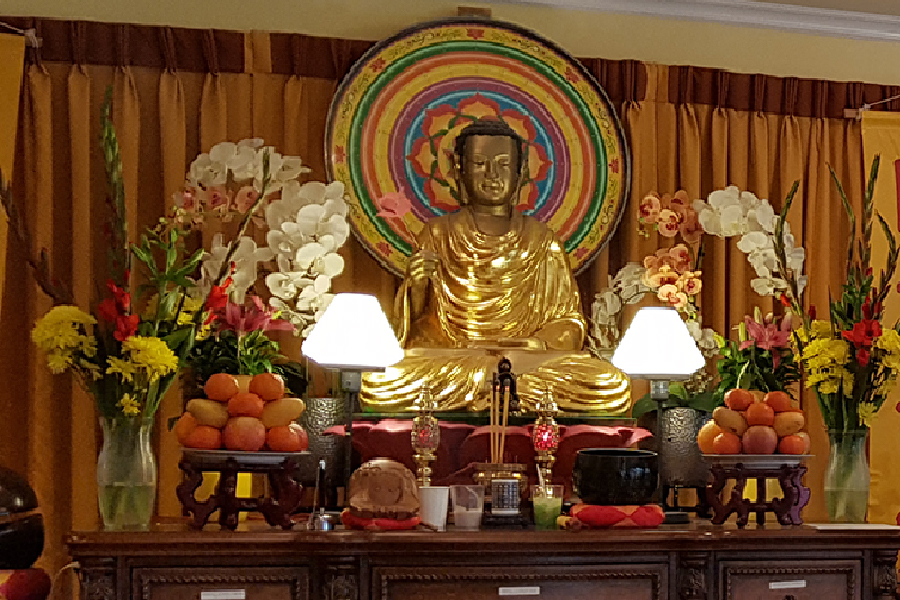
Early this morning, I entered the meditation hall and stood in front of the statue of Lord Sakkamuni Buddha smiling and holding in his hand a stem of lotus. I felt a deep emotion upwelling in me. Images from the ancient past flashed into my mind ...
...While still young, a black-haired young man endowed with the blessing of youth, the prime of life, though my mother and father wished otherwise and wept with tearful faces, I shaved off my hair and beard, put on the yellow robe, and went forth from home into homelessness... (Majjhima Nikāya, The Noble Search, MN26:14)
Prince Siddhattha was then seeking the “unborn, un-aging, unailing, deathless, sorrowless, and undefiled security from bondage, that is Nibbāna”.
“Being myself subject to birth, having understood the danger of what is subject to birth, I seek the unborn supreme security from bondage, Nibbāna. Supposed that, being myself subject to aging, sickness, death, sorrow, and defilement, having understood the danger of what is subject to aging, sickness, death, sorrow, and defilement, I seek the un-aging, unailing, deathless, sorrowless, and undefiled supreme security from bondage, Nibbāna” (Majjhima Nikāya, The Noble Search, MN26:13)
Over 6 long years, the Bodhisatta tried almost all spiritual practices prevalent at the time.
First, he joined a famous teacher at the time, Āḷāra Kālāma, and after a short while, attained all three stages of formless meditation taught by the teacher:
1. The Base of Boundless Space (P: Akāsānañcā-āyātana, V: Không Vô Biên Xứ)
2. The Base of Boundless Consciousness (P: Viññānañcāyātana, V: Thức Vô Biên Xứ)
3. The Base of Nothingness (P: Ākiñcañāyatana, V: Vô Sở Hữu Xứ)
Next, he joined a second teacher, Uddaka Rāmaputta, and attained the fourth stage of formless meditation:
4. The Base of Neither Perception nor Non-Perception (P: N’eva saññāyatana, V: Phi Tưởng Phi Phi Tưởng Xứ)
However, at each stage the Bodhisatta realized that these attainments did not meet the goals that he set for himself when he started his spiritual quest. In turn, he decided the leave the two teachers.
...But it occurred to me: “This Dhamma does not lead to disenchantment, to dispassion, to cessation, to peace, to direct knowledge, to enlightenment, to Nibbāna, but only to the reappearance in the base of nothingness (in the base of neither-perception-nor-non-perception)”. Not being satisfied with that Dhamma, I left it and went away. (Majjhima Nikāya, The Noble Search, MN 26:15-16)
Next, the Bodhisatta wandered into a forest along the Nerañjara river. There, he met a group of five ascetics lead by Koṇdañña. At the time, he still had not found a method of practice.
Koṇdañña was the Brahmin who, upon seeing the newly-born prince Siddhattha, predicted that he will renounce his family to follow the spiritual path and will become a great enlightened being. It was this prediction that led King Suddhodana, prince Siddhattha’s father, to hatch a plan to keep the prince secluded in the palace until his adulthood to prevent him from witnessing any human suffering such as aging, sickness and death. He invited famous teachers to come to the palace and teach the young prince literature, the Veda texts, martial arts, horse riding, elephant riding, warfare etc. The young prince needed to master both the humanities and martial arts as he was a member of the Warrior (P: Khattiya) caste and was destined to rule his country upon adulthood. The King also built for the prince three palaces where he can enjoy all pleasures of life: a winter palace, a summer palace and a palace for the rainy season. The next stage of the King’s plan was to marry prince Siddhattha when he was 16 years old to princess Yasodharā, his cousin in the Sakka clan, who was also 16 years of age. The King hoped that the prince will be bound for life by the bonds of love and will in time happily succeed him to the throne.
However, causal conditions resulted in events taking a direction not foreseen by the King. On his first trip outside the palace, the prince was shocked when he saw an old, emaciated and miserable-looking person. On his second trip outside the palace, he saw a sick person who suddenly fell on the roadside and immediately asked his charioteer to turn back and return to the palace. On his third trip, he saw a dead person being carried to the funeral pyre and realized that he too, will become old, sick and dead. On his fourth trip, he saw a monk who had decided the leave his family and seek liberation from the suffering caused by aging, sickness and death.
The prince decided to leave his family when he was 29 years of age. He left in the middle of the might, after his wife princess Yasodharā had just given birth to their first son, Rāhula. He considered that Rahula was a “present” that he left to his parents and princess Yasodharā. As for him, it was time for him to leave and disappear into the unknown.
The Bodhisatta might have “disappeared”, but in reality every day he walked in broad daylight on his alms rounds, and therefore the King could have easily found him. Why was the Bodhisatta left alone during the six years of his search? These six years were filled with the longing of his parents, wife and son. They were also filled with his own sacrifice of all worldly pleasures. Both sacrifices were made to allow the Bodhisatta the opportunity to fulfill his noble aspiration of finding liberation from aging, sickness and death for himself and all of humanity. How can we, those who follow behind, adequately repay these noble sacrifices?
A few details in the suttas take us into the confidence of both King Suddhodana and prince Siddhattha. Let us revisit the passage quoted earlier in this text:
...While still young, a black-haired young man endowed with the blessing of youth, the prime of life, though my mother and father wished otherwise and wept with tearful faces, I shaved off my hair and beard, put on the yellow robe, and went forth from home into homelessness... (Majjhima Nikāya, The Noble Search, MN26:14)
This text shows that prince Siddhattha did not run away from his parents. He confided in them his aspirations and his parents expressed their sorrow. For this reason, he decided to leave in the middle of the night in order to lessen their pain.
Mahāpajāpatī Gotamī was the sister of prince Siddhattha’s own mother. She later became King Suddhodana’s consort and looked after the young prince since her sister died seven days after giving birth to the prince. Prince Siddhattha loved her as if she was his own mother.
King Suddhodana had followed the Bodhisatta’s progress through the difficult period when the Bodhisatta searched and failed to find a spiritual practice that meets his goals. We can now understand better why Koṇdañña and his group suddenly met the Bodhisatta and decided to “serve” him. Under their guidance, the Bodhisatta practiced austerity. He practiced with great vigor, isolated himself in the forest and practiced the most extreme forms of self-mortification with regards to eating, drinking, wearing clothes, sleeping and resting. The result was that one day he was exhausted, fell down and lost consciousness. A deva once reported to King Suddhodana: “Your son had died”. But the King did not believe him. Why is that so? It probably was because the King knew at all times what was happening to his son. Another detail that we may consider was that, during the time when the Bodhisatta underwent his austerity practice, princess Yasodharā also forwent wearing jewelry and fine clothes and took to wearing only rough fabric.
These details show us the noble sentiments of King Suddhodana, consort Gotamī, and princess Yasodhara who endured their sorrow and secretly supported the Bodhisatta on his quest.
The Bodhisatta’s practice of austerity did not yield the desired outcome. He decided to abandon austerity and resumed begging for food. The Koṇdañña group thought that the Bodhisatta had decided to return to a life of indulgence and left him in disgust.
The Bodhisatta had come to an impasse. He then suddenly remembered an experience that he had when he was a 10-year old youth at the occasion of the Ceremonial Plowing of the Land festivities. In that occasion, he sat under the shade of a Jambu tree, breathed in and out, and experienced a totally silent mind and a feeling of elation and bliss.
The Bodhisatta decided to practiced again this method, and quickly experienced a totally silent mind and a feeling of elation and bliss enveloping his whole body. The Bodhisatta decided to cross the Nerañjara river, found a quiet site in the forest at the edge of the river, sat at the foot of a large Pipphala (Pipal) tree, and made the following vow: “Though only my skin, sinews, and bones remain, and my blood and flesh dry up and wither away, yet will I never stir from this seat until I have attained full enlightenment (sammā-sambodhi).”
There, he went through four stages of meditation and dwelt in a state of stable immobility stillness (samādhi). From his Buddha-nature burst forth the ultimate truths that govern the world and human life:
- Karma, or mental defilements, is the cause of the unending cycle of rebirths.
- the world and human beings come into existence through the co-dependent arising of causal conditions. They will also cease to exist when these casual conditions no longer exist.
- everything in the world is impermanent and ever-changing. Phenomena endlessly arise, cease to exist and transform into something else.
- the essence of the world and human beings is emptiness and illusion.
- the essence of the world and human beings is suchness, immobility and equality.
After the Buddha attained the ultimate perfect wisdom, the left the Bodhi Tree and started to travel the country to teach the dhamma in accordance with causal conditions.
Within the first year of the Buddha attaining enlightenment, news had arrived at the court of King Suddhodana. The King immediately sent out messengers to invite the Buddha to visit Kapilavatthu. The first messenger arrived at the place where the Buddha was staying. As the Buddha was in the middle of a discourse to his disciples, the messenger listened to it, decided to renounce worldly life and not return to the court. King Suddhodana did not see the messenger come back and decided to send a second messenger. The same thing occurred again. The King then decided to ask Channa, who was formerly prince Siddhattha’s charioteer, to be the third messenger. This time, Channa conveyed to the Buddha King Suddhodana’s invitation, which the Buddha accepted. As a result, Kapilavatthu got to celebrate the return of the Buddha. On one hand was the longing, love and expectation of everyone, including a young child who never got know his father. On the other was the change from the hardships required to attain the noble objective. The following verses would provide an apt description of the situation:
“Could the moonlight be split in two,
A half for the lonely pillow, the other to light the far away path”
Over time, generations upon generations have followed the Buddha’s footsteps on the wisdom path. They have awakened and decided to leave the worldly life and family home to seek the tranquility of the deep forest as a place to practice. But they no longer have to endure the perils of following the wrong path. For they had the guidance of the noble teaching that was orally transmitted from teacher to disciple, from generation to generation. The path was now so clear and all they needed to do was to follow the teaching. All those who followed behind had benefited from the truths discovered by the Buddha.
This blessing from the Buddha and ancient Buddhist Masters was as vast as the sky and as immense as the ocean.
About 200 years after the Buddha entered Nibbāna, in circa 250 BC, a thousand elders who were well versed in the knowledge of the Three Baskets (Tipiṭaka) gathered for the Third Sutta-consolidating Council. This Council was sponsored by King Aśhoka and resulted in a version of the Three Baskets which was written down for the first time in Pāli. From that time, Buddhism had an official version of the Three Baskets, which further facilitated the study of Buddhism and allowed its spread to all parts of the Indian sub-continent, and then further south beyond.
It wasn’t until the 2nd century AD when King Kaniṣka convened the Fourth Sutta-consolidating Council, that we see a Sanskrit version of the Three Baskets. This version facilitated the propagation of Buddhism to countries to the north of India.
Through the centuries, Buddhism has been preserved through these two traditions, the Southern School and the Northern School.
Nowadays, we latecomers have benefited from the fount of wisdom that flew from the Enlightened One. This fount has been flowing continuously for over 2,500 years with the help of so many Masters who have dedicated their life to preserve and transmit it to further generations. These Masters too have renounced the worldly life and their family to seek refuge in the tranquility of the forest to practice, train themselves over many years, and develop the two primordial Buddhist qualities of compassion and wisdom. Limitless compassion and infinite wisdom.
The fountain of wisdom continues to flow, as ever. Before the Buddha, it had already flown, unbeknown to people. The Buddha recognized it and taught it during the 45 years he spent travelling and teaching. He and his congregation (sangha) had to endure much abuse, calumny, privation and hardship.
There are now those who immerse themselves in the freshness of the fountain and those who continue to stay on the edge and suffer from the heat of suffering. It is a choice for one to make.
Today, on the 15th of April 2021, I end this series of sharing from the heart. The date coincidentally falls on the month of April, when spring is in full bloom at my Master’s Hall. Roses are in flowers. Flowering prunus show their white flowers, like snowflakes that linger on branches. Traditional Vietnamese Mai (ochna) trees are in bloom. Bunches of peppers, colored green and red, twirl in the wind.
I remember that many many years ago, prince Siddhattha was born in spring, attained enlightenment one night in spring, and entered Nibbāna a day in spring during the month of Vesak. The Buddha came into this world among nature, attained enlightenment among nature, and entered nibbāna also among nature. O, how beautiful is nature!
Today, I make offering to the Three Jewels this flower from my heart and mind, in deep gratitude of the Buddha, all ancient Masters and my own Master.
I would also like to offer this modest present to all those who share a favorable karmic bond.
Homage to our teacher Sakkamuni Buddha.
Bhikkhuni Thích Nữ Triệt Như
Master’s Hall, April 15th, 2021


_____________________________________________________________________
Triệt Như - Tâm Tình Với Nhau - BÀI 100
CẢM NIỆM ÂN ĐỨC NGƯỜI XƯA
Sáng sớm nay tại thiền đường, đứng trước tôn tượng Đức Phật Thích ca, tay cầm cành hoa sen, mỉm cười, chợt trong tâm dâng trào một nguồn cảm xúc. Những hình ảnh ngày xa xưa, thoáng ẩn thoáng hiện trong thâm tâm...
...Khi Ta còn trẻ, niên thiếu, tóc đen nhánh, đầy đủ huyết khí của tuổi thanh xuân, trong thời vàng son cuộc đời, mặc dầu cha mẹ không bằng lòng, nước mắt đầy mặt, than khóc, Ta cạo bỏ râu tóc, đắp áo cà-sa, xuất gia, từ bỏ gia đình, sống không gia đình....(Đại kinh Saccaka)
Ngài có mục tiêu là đi tìm cái “không bị sanh ra (cái vô sanh), cái không bị già, không bị bệnh, không bị chết (cái bất tử), cái không bị sầu, không bị ô nhiễm, hết khổ, đó là niết bàn”.
Vậy Ta, tự mình bị sanh, sau khi biết rõ sự nguy hại của bị sanh, hãy tìm cầu cái không sanh, vô thượng an ổn khỏi các khổ ách, Niết-bàn; tự mình bị già... cái không già... tự mình bị bệnh... cái không bệnh... tự mình bị chết... cái bất tử... tự mình bị sầu... cái không sầu... tự mình bị ô nhiễm, sau khi biết rõ sự nguy hại của cái bị ô nhiễm, hãy tìm cầu cái không ô nhiễm, vô thượng an ổn khỏi các khổ ách, Niết-bàn.(Kinh Thánh cầu)
Trong suốt 6 năm dài, bồ tát đã trải qua hầu hết những cách tu phổ biến của thời đó. Ban đầu ngài tìm đến:
- Một vị thầy nổi tiếng, ĀḶĀRA KĀLĀMA, sau một thời gian ngắn, bồ tát đạt được 3 tầng thiền vô sắc:
1- Hư không vô biên xứ
2- Thức vô biên xứ
3- Vô sở hữu xứ
Sau đó, với vị thầy thứ hai, UDDAKA RĀMAPUTTA, ngài đạt được tầng thiền vô sắc thứ 4:
4- Phi tưởng phi phi tưởng xứ
Tuy nhiên cả 2 trường hợp đều không hướng đến mục tiêu của bồ tát, nên ngài quyết định từ giả lần lượt 2 vị thầy ra đi.
...Rồi Ta suy nghĩ: "Pháp này không hướng đến yểm ly, không hướng đến ly tham, không hướng đến đoạn diệt, không hướng đến an tịnh, không hướng đến thượng trí, không hướng đến giác ngộ, không hướng đến Niết-bàn, mà chỉ đưa đến sự chứng đạt Phi tưởng phi phi tưởng xứ". Như vậy, này Aggivessana, Ta không tôn kính pháp ấy và từ bỏ pháp ấy, Ta bỏ đi.(Đại kinh Saccaka)
Sau đó bồ tát lang thang trong một khu rừng ven bờ sông Ni Liên thiền. Vẫn chưa biết pháp tu. Bồ tát gặp nhóm 5 vị đạo sĩ tu khổ hạnh, người dẫn đầu là ngài KOṆḌAÑÑA (Kiều Trần Như)
Nhớ lại, ngài Kiều Trần Như khi xưa, đã tiên tri về thái tử Siddhattha khi ngài vừa mới giáng trần, rằng vị này về sau sẽ xuất gia, và sẽ trở thành một bậc Giác ngộ. Có lẽ vì lời tiên tri này mà vua cha SUDDHODANA (Tịnh Phạn) mới có kế hoạch giữ chân thái tử trong hoàng cung suốt thời niên thiếu cho tới khi trưởng thành. Nào là mời các vị thầy nổi tiếng vào hoàng cung hướng dẫn thái tử văn chương, kinh điển Veda, võ nghệ, cưỡi ngựa, cưỡi voi, điều binh, ra trận...Thái tử phải điêu luyện văn và võ, vì dòng dõi Chiến sĩ, sẽ cầm quyền trị nước sau này. Mặt khác, vua cha cho thái tử 3 tòa cung điện vui chơi trong 3 mùa: mùa đông, mùa hạ và mùa mưa. Cũng trong kế hoạch đó, vua cha cưới công chúa YASODHARĀ, một cô em họ trong hoàng tộc Sakka mới 16 tuổi cho thái tử Siddhattha cũng 16 tuổi. Vua cha mong rằng sợi dây luyến ái này sẽ buộc chân thái tử suốt đời và ngài sẽ vui vẻ kế vị ngôi vua sau này.
Nhưng nhân duyên cuộc đời lại xoay theo chiều hướng khác. Trong lần đầu ra khỏi hoàng cung, thái tử thoắt trông thấy hình ảnh một người già nua gầy mòn héo hắt, ngài bị chấn động tâm tư, lần thứ hai lại trông thấy cảnh một người bệnh hoạn, ngã lăn trên đường, ngài lập tức quay đầu ngựa trở về, lần thứ ba dạo chơi, trông thấy một người chết trên cái cáng mang đi hỏa thiêu, ngài bừng tỉnh: ta rồi cũng sẽ già, bệnh và chết y như thế. Lần thứ tư ngài gặp một vị tu sĩ, đã rời khỏi gia đình, đang trên đường tìm cầu thoát ra khỏi khổ đau của già, bệnh và chết.
Ngài quyết định rời khỏi gia đình, một đêm khuya, năm ngài 29 tuổi, ngay sau khi biết tin công chúa Yasodharā vừa mới sinh đứa con trai đầu. RĀHULA, đứa con trai đầu của thái tử Siddhattha, như là một “tặng phẩm” để lại cho cha mẹ và công chúa Yasodharā. Còn ngài thì ra đi, biến mất.
Nói “biến mất”, chứ thiệt ra bồ tát vẫn hằng ngày ôm bát khất thực giữa ban ngày, nếu vua cha muốn, vẫn có thể tìm được ngài dễ dàng. Mà tại sao bồ tát vẫn thong dong trong suốt 6 năm trời? Sáu năm thương nhớ, mong đợi của cha mẹ, vợ con. Sáu năm hi sinh hạnh phúc riêng mình. Để cho bồ tát hoàn thành tâm nguyện cao thượng là tìm con đường ra khỏi biển khổ của già- bệnh và chết cho mình và cho mọi người. Những tấm lòng cao quý đó, kẻ hậu thế chúng ta biết làm sao đền đáp lại cho xứng đáng?
Có vài chi tiết cho mình hiểu thêm tâm tình của vua Tịnh Phạn và thái tử Siddhattha. Như ở đầu bài viết này:
...Khi Ta còn trẻ, niên thiếu, tóc đen nhánh, đầy đủ huyết khí của tuổi thanh xuân, trong thời vàng son cuộc đời, mặc dầu cha mẹ không bằng lòng, nước mắt đầy mặt, than khóc, Ta cạo bỏ râu tóc, đắp áo cà-sa, xuất gia, từ bỏ gia đình, sống không gia đình....(Đại kinh Saccaka)
Thái tử Siddhattha không phải trốn cha mẹ mà đi. Ngài đã bày tỏ tâm nguyện của mình với cha mẹ. Nhưng cha mẹ than khóc. Vì thế, ngài chọn một đêm khuya để ra đi, những người thân yêu sẽ bớt đau lòng.
Bà Mahāpajāpatī Gotamī là em gái của bà hoàng hậu MĀYĀ, cũng là vương phi của vua Tịnh Phạn, bà đã chăm sóc thái tử Siddhattha khi bà Māyā mất 7 ngày sau khi sanh con. Thái tử đã thương yêu bà như mẹ.
Trong mấy năm gian khổ, ngài tìm thầy tu tập, rồi thất bại. Vua vẫn dõi mắt trông theo bước chân của con mình. Vì thế, ta có thể hiểu nhóm ngài Kiều Trần Như từ đâu lại được gặp bồ tát và “hầu hạ” ngài. Theo sự hướng dẫn của nhóm này, bồ tát tu khổ hạnh. Ngài tinh tấn hơn nữa, vào rừng tu một mình, là thời gian khổ hạnh khốc liệt, ăn, uống, mặc, ngủ, nghỉ đều hành hạ thân mình tối đa. Kết quả, sức khỏe kiệt quệ, té xuống, bất tỉnh. Có một lần, một vị trời báo tin cho vua Tịnh Phạn: ”Con trai ông chết rồi”. Nhưng vua không tin. Vì sao, vua không tin? Có lẽ vua vẫn thường xuyên biết tin tức của con mình. Có một chi tiết nữa, công chúa Yasodharā ở hoàng cung cũng từ bỏ nữ trang, quần áo sang trọng, mặc vải thô sơ, như bồ tát trong thời gian khổ hạnh.
Những chi tiết này cho mình hiểu thêm tấm lòng cao thượng của vua cha, của bà Gotamī, của công chúa Yasodharā kham nhẫn biết bao, hỗ trợ âm thầm cho bồ tát thực hành tâm nguyện của mình.
Nhưng khổ hạnh cũng không đem lại kết quả mong muốn. Bồ tát từ bỏ khổ hạnh, đi khất thực trở lại. Nhóm ngài Kiều Trần Như tưởng là bồ tát quay trở lại đời sống hưởng thụ nên chán ghét bỏ đi.
Bấy giờ, trong lúc bế tắc, ngài chợt nhớ lại kinh nghiệm thời thơ ấu, khoảng 10 tuổi, khi vua cha làm lễ Cày Cấy dưới ruộng, ngài ngồi dưới bóng mát cây Jambu, hít thở, đạt được hỷ lạc và tâm hoàn toàn tĩnh lặng.
Ngài quyết định thực hành trở lại phương thức này và cũng kinh nghiệm nhanh chóng tâm hoàn toàn tĩnh lặng và hỷ lạc dâng tràn. Vì thế bồ tát qua sông Ni Liên thiền, đến khu rừng hoang vắng, chọn một gốc cổ thụ Pipphala (Pipal), nói lên lời nguyện sắt đá: “Dù cho máu thịt của ta khô cằn, nếu ta không giác ngộ, ta quyết không rời khỏi chỗ này”.
Và rồi kết quả, qua 4 tầng Thiền, bồ tát an trụ trong Định bất động vững chắc. Phật tánh bật ra kiến giải những chân lý thường hằng chi phối con người và thế gian:
- Con người tái sinh mãi do nghiệp, hay lậu hoặc.
- Con người và thế gian là những pháp do Duyên sinh thì rồi cũng do Duyên mà diệt..
- Thế gian tất cả đều vô thường, biến dịch, có rồi mất, rồi trở thành cái khác.
- Bản thể con người và thế gian là Không, là Huyễn.
- Bản thể con người và thế gian là Như như bất động, là Bình đẳng.
Sau khi Đức Phật đạt được sự minh triết thâm diệu hoàn toàn, ngài rời khỏi Bồ Đề Đạo tràng và bắt đầu đi khắp nơi tùy duyên giáo hóa.
Ngay trong năm đầu tiên, tin tức bồ tát đã giác ngộ, bay về tới triều đình vua Tịnh Phạn. Vua lập tức gởi sứ giả đi thỉnh mời Đức Phật về Kapilavatthu. Người sứ giả tới nơi, nghe Đức Phật đang thuyết một thời pháp cho đoàn đệ tử của ngài, nghe xong, ông phát tâm xin xuất gia và không trở về. Chờ mãi không nghe tin tức gì, vua lại phái người sứ giả thứ hai. Cũng tương tự vậy, người thứ hai ở lại tu không trở về mà cũng quên thưa thỉnh. Vua lại phái người thứ ba, là Channa, chàng thanh niên đánh xe cho thái tử ngày xưa. Lần này, Channa đã chuyển lời mời thỉnh của vua Tịnh Phạn. Và thế là cả thành Kapilavatthu tưng bừng chuẩn bị chào mừng Đức Phật trở về. Một bên là nhớ, là thương, là buồn tủi, mong chờ, với đứa con thơ ngây chưa biết mặt cha. Một bên là dãi dầu mưa nắng, nhọc nhằn gian truân vì cái lý tưởng cao thượng của mình. Người xưa có câu:
“Vầng trăng ai xẻ làm đôi,
Nửa in gối chiếc, nửa soi dặm trường”.
Thời gian đi qua...tiếp nối con đường minh triết của đức Phật, từng thế hệ, cũng tỉnh ngộ, cũng từ bỏ thế tục, xuất gia, vào rừng núi ẩn tu. Nhưng bây giờ không phải gian nan tìm kiếm những phương cách tu tập sai lầm nữa. Bây giờ các vị ẩn tu đã được thầy mình trao truyền chánh pháp trực tiếp, từ đời trước ghi nhớ, truyền lại cho đời sau. Các vị chỉ thực hành đúng y chánh pháp, con đường đi đã quá rõ ràng. Kẻ hậu sinh được thừa tự pháp của Đức Phật.
Ân đức này, của Phật và chư Tổ, như trời như biển.
Qua hơn 200 năm sau khi Đức Phật nhập diệt (khoảng năm 250 BC) 1.000 vị Trưởng lão tinh thông Tam tạng hội nhau lại kết tập kinh điển lần thứ III. Lần này nhờ có vua AŚOKA bảo trợ, hình thành Tam Tạng, ghi lại thành văn bản tiếng Pāli. Bắt đầu từ đây, chúng ta mới có Kinh điển chính thức, tu học dễ dàng hơn, phát triển ra khắp nơi trong Ấn Độ và truyền đi xuống phía nam, ngoài Ấn Độ.
Mãi tới thế kỷ II sau công nguyên, vua KANIṢKA bảo trợ kỳ kết tập kinh điển lần thứ IV, hình thành Tam tạng kinh điển ghi lại thành văn bản tiếng Sanskrit, sau đó truyền bá khắp nơi, ra hướng bắc, ngoài Ấn Độ.
Từ đó theo dòng thời gian, Phật giáo được gìn giữ và hình thành 2 dòng Pháp quan trọng: Nam Tông và Bắc Tông sau này.
Chúng ta, những kẻ hậu sinh, thừa hưởng suối nguồn minh triết của bậc Giác Ngộ. Suối nguồn này vẫn tuôn chảy qua hơn 2500 năm nhờ không biết bao nhiêu vị Tổ sư dốc hết tâm huyết ra gìn giữ, trao truyền lại cho thế hệ sau tiếp nối. Chư vị Tổ cũng đã từ bỏ gia đình, lìa xa thế gian, ẩn tu, tự rèn luyện mình bao năm, phát huy cho được 2 phẩm chất: từ bi và trí tuệ. Từ bi phát huy mãi cho tới vô biên. Trí tuệ cũng sẽ phát huy mãi tới vô cùng.
Dòng suối minh triết, vẫn đang tuôn chảy, như bao giờ. Trước khi có Phật, nó cũng tuôn chảy. Nhưng chưa ai biết. Đức Phật Thích Ca đã trông thấy, và đã chỉ bày trong suốt 45 năm bôn ba giáo hoá. Ngài và tăng đoàn của ngài cam chịu biết bao là sĩ nhục, là oan ức, là đói khát vất vả, dãi nắng dầm mưa.
Vậy ai đang tấm đẵm trong dòng suối mát này, còn ai cứ mãi đứng trên bờ, chịu nóng bức phiền não. Là do mình mà thôi.
Hôm nay, ngày 15- 4- 2021, con chấm dứt loạt bài tâm tình này, tình cờ rơi vào tháng tư. Ở Tổ đình đang là mùa xuân. Có hoa đào hồng, có cây hoa đào trắng, thật trắng tinh khôi, xa trông như những chùm hoa tuyết rơi đọng lại trên cành. Có hoa mai vàng. Có những chùm tiêu, trái nhỏ xíu màu xanh xanh hồng hồng, đong đưa theo gió.
Con nhớ ngày xa xưa, ngày đó, Đức Phật giáng trần nhằm mùa xuân, Đức Phật bừng sáng giác ngộ cũng trong một đêm mùa xuân và đêm Đức Phật vào đại niết bàn cũng cùng là trong tháng VESAK. Đức Phật giáng trần giữa thiên nhiên, giác ngộ giữa thiên nhiên, rồi nhập niết bàn cũng giữa thiên nhiên. Thiên nhiên tươi đẹp biết bao!
Hôm nay, cảm niệm ân đức của Phật, của chư Tổ Thiền đức, của Thầy, con cúng dường lên Tam Bảo một đóa hoa tâm này.
Con cũng riêng dâng tặng món quà nhỏ này cho người hữu duyên.
Nam mô bổn sư Thích ca mâu ni Phật.
Thích nữ Triệt Như
Tổ đình, ngày 15- 4- 2021

%7Cutmcsr%3D(direct)%7Cutmcmd%3D(none)%3B%2B__utmv%3D683175261.-%3B)